

From Sampling to Full Inspection
100% in-line monitoring, meter-by-meter sensing—eliminating risks at source and stopping defective outflow.

Adhesive / glue layer: 5 um - 50 um, Measures adhesive between board/foil; affects seal strength and stiffness
Barrier coating (e.g. PVAC): 5 um - 30 um, Controls moisture/O₂ barrier; determines food shelf life
100% in-line monitoring, meter-by-meter sensing—eliminating risks at source and stopping defective outflow.

Correct deviations in seconds via a monitor–analyze–feedback loop; material utilization up 5%–15%.

Data models match barrier thickness precisely—balancing performance and cost, avoiding over-coating waste.

Auto-generates tamper-proof e-batch records for full traceability and compliance audits.
100%
Quality Coverage
Full inspection, no gaps Quality risk to zero
+15%
Material Utilization
Less scrap waste Direct cost & efficiency gains
Precision
Cost Optimization
Match material as needed Lower unit cost
Easy Pass
Compliance Audit
Inspection data logged Incidents fully traceable
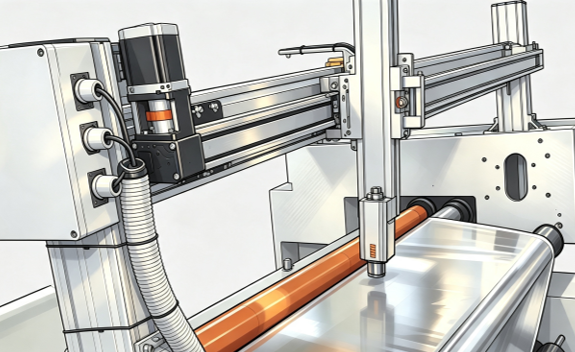
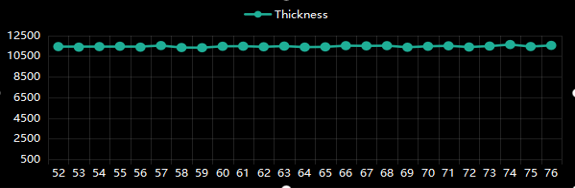
Lamination adhesive between board and foil is typically 5–50 µm and controls seal strength and stiffness. Barrier coatings such as PVAC at 5–30 µm set moisture and oxygen barrier performance, which determines food shelf life.
Meter-by-meter sensing covers the full web so defective coating cannot ship. Sampling leaves gaps; 100% in-line monitoring is used to drive quality risk toward zero and to generate tamper-proof e-batch records for audits.
A monitor–analyze–feedback loop corrects deviations in seconds. Matching barrier thickness to the required performance avoids over-coating. Sites using this approach report material-utilization gains on the order of 5%–15%.
Automated inspection writes electronic batch records that cannot be tampered with. Thickness and barrier data stay traceable for the lot, which simplifies quality audits when a shelf-life or seal-strength incident is investigated.
